 Legend
The moving rock
How the island was made
- Source
- Official site
- Status
- Mythological tradition
- See it
- From the shore
Guides
Language
EnglishCurrency
US dollar · $GetYourGuide uses the currency you choose.
Guide · History and legend
A wandering priest, a headman who drove him away, a rock that drifted into the sea and snakes made from a sash. What the official sources say, and where history ends and legend begins.
Editorial team, tanahlottempletour.comUpdated October 23, 2026Reading time about 6 minutes41 sources
What to know first
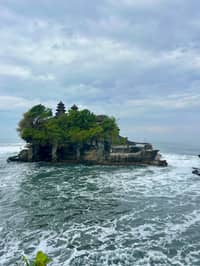
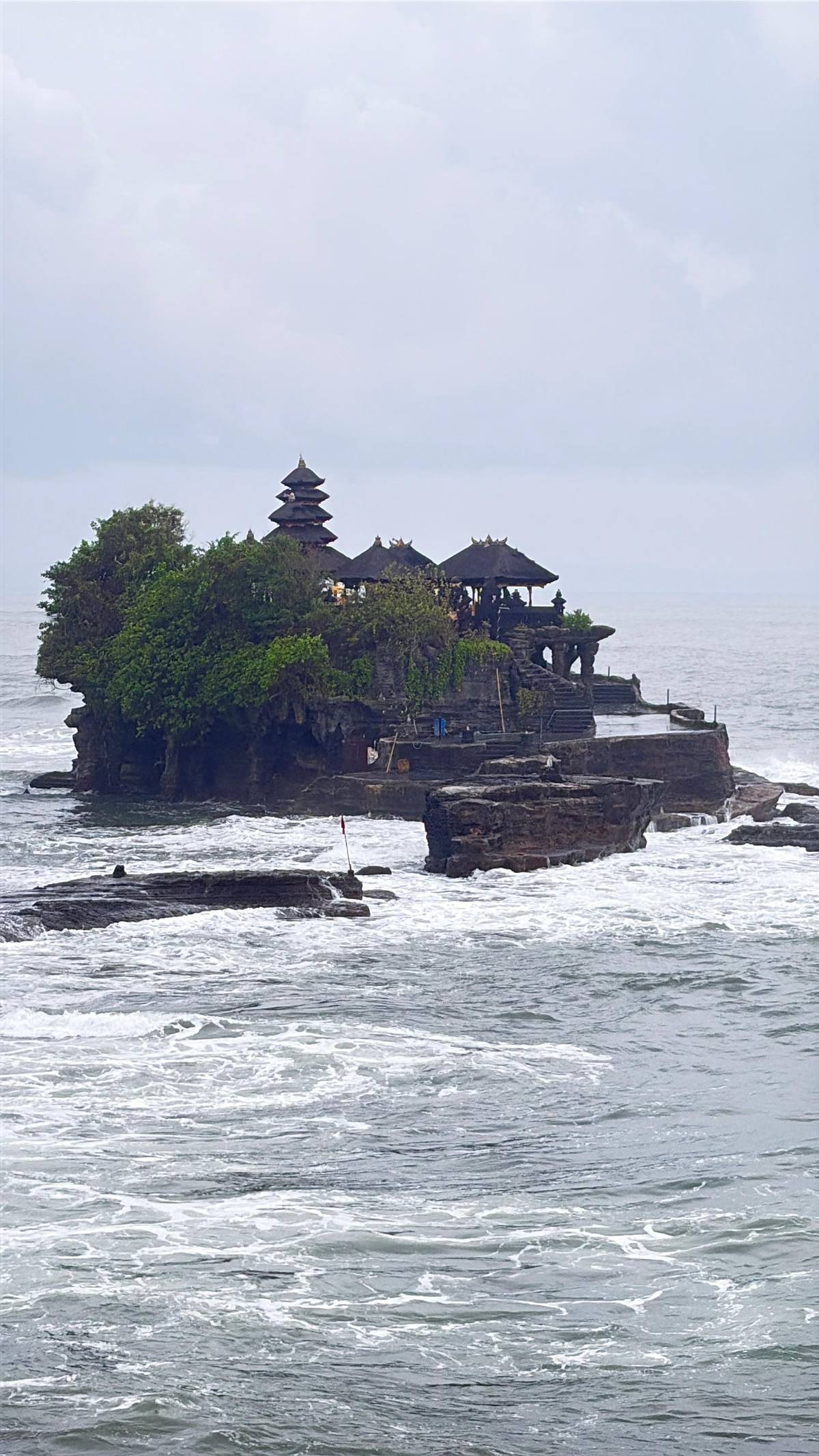
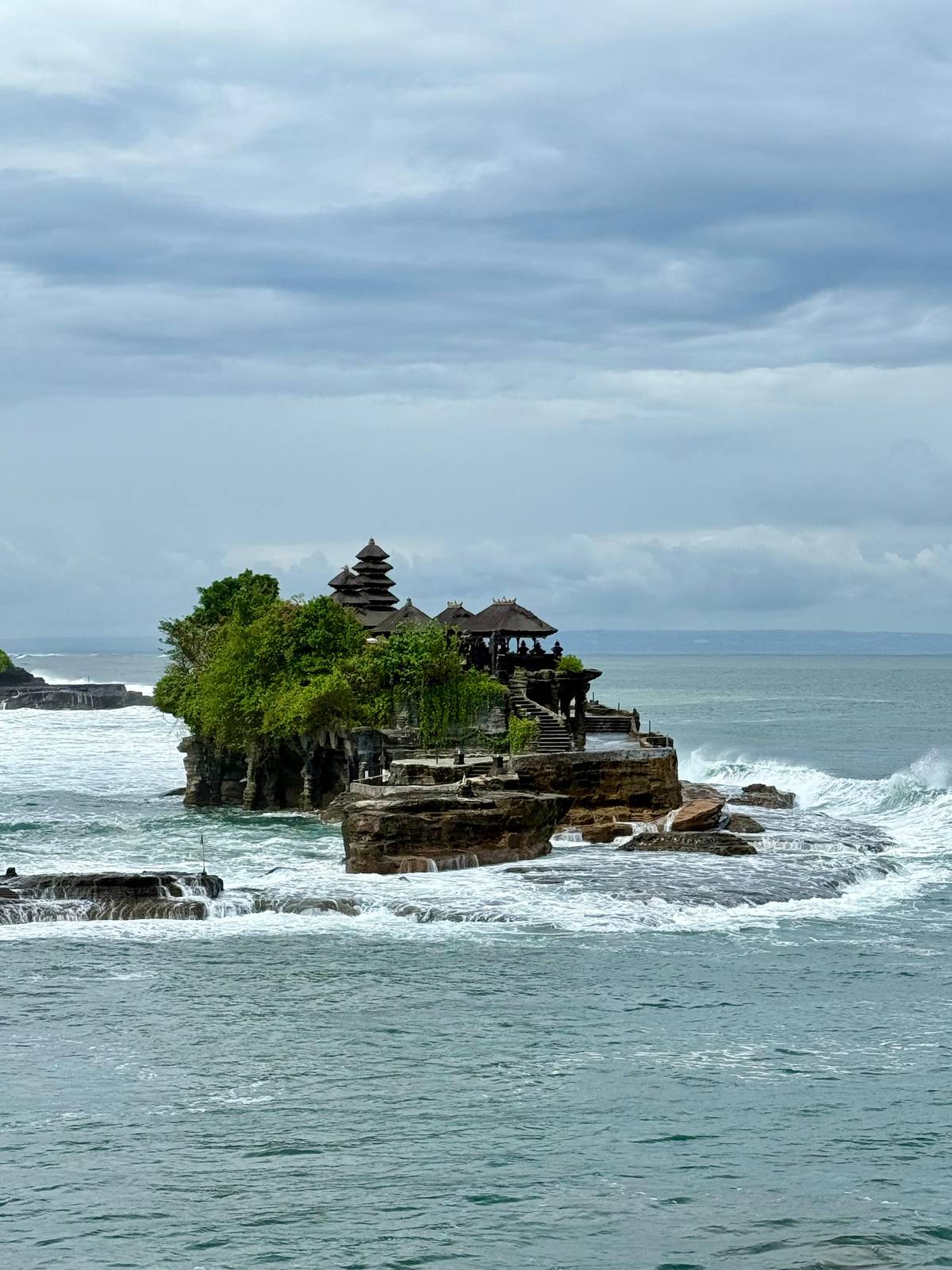
Tanah Lot means land in the sea, and the name describes the place exactly: a rock just off the coast of Tabanan with shrines on its crown.78 The Ministry of Tourism states that the temple was built to worship Bhatara Segara, the god of the sea.1 It is counted among the seven main Balinese sea temples.9
You see the dedication all around: the temple stands at the very edge of the sea, and one of the small temples nearby holds its worship especially at high tide.10 For the people of Beraban and the surrounding villages, this is not a monument but a working temple with its own calendar.
Most visitors meet it as a view. Knowing the story behind the rock changes how you look at it: the cliffs, the caves at its foot and the shrines on top each belong to a tale that the Balinese still tell. The sections below follow that tale and mark clearly what the sources treat as history and what they call legend.
The legend, step by step
15th century
Nirartha comes to Bali under Dalem Waturenggong.11
On the coast
He follows it from the south-east to a spring.12
At Beraban
The headman refuses his teaching and chases him off.13
The legend
The rock where he sat becomes an island in the sea.14
The guardians
He makes a snake to guard the temple, the story says.15
The parting
Ki Baru Gajah, kept today at Kediri.16
The central figure is Dang Hyang Nirartha, also called Dang Hyang Dwi Jendra, a Hindu priest from the time of the Majapahit kingdom in East Java.2 According to the palm-leaf text Dwijendra Tattwa, as the official Tanah Lot site retells it, he came to Bali in the 15th century, when the island was ruled by Dalem Waturenggong.11 The Ministry of Tourism also credits him with the system of three temples found in Balinese villages.17
Travelling along the southern coast, Nirartha saw a holy light from the south-east during his meditation and followed it until he found a holy spring.12 Nearby he settled on a rock known as Gili Beo, since gili means rock and beo means bird.18 There, the story says, he meditated and devoted himself to the god of the sea.
How old the temple really is cannot be pinned to a single year. A study published through Indonesia's Ministry of Education and Culture places its founding at around the 15th to 16th century.3 The Majapahit Museum at the entrance to the site retells this journey with statues, artifacts, sacred heirlooms and coins of the Majapahit era.1920
The temples around the rock
| Temple | Devoted to | When it matters |
|---|---|---|
| Pura Luhur Tanah Lot | Bhatara Segara, the sea god | Every 210 days |
| Pura Batu Bolong | Sea rituals such as the Pakelem | Its own pujawali |
| Pura Batu Mejan | Holy water for purification | Low water shows a spring |
| Pura Enjung Galuh | Dewi Sri, goddess of prosperity | Prayers for crops |
| Pura Jro Kandang | The ruler of crop pests | Protection from pests |
| Pura Pakendungan | Irrigation societies of Kediri | Kris procession |
From the official Tanah Lot site and the Ministry of Tourism.162122232425262728
Three threads of the story
LegendHow the island was made
 Folklore
Guardians from a sash
 Living ritual
A gift to the headman
Decision helper
Pick what interests you most
To protect the temple, with his mighty power, he created a poisonous snake from his sash.
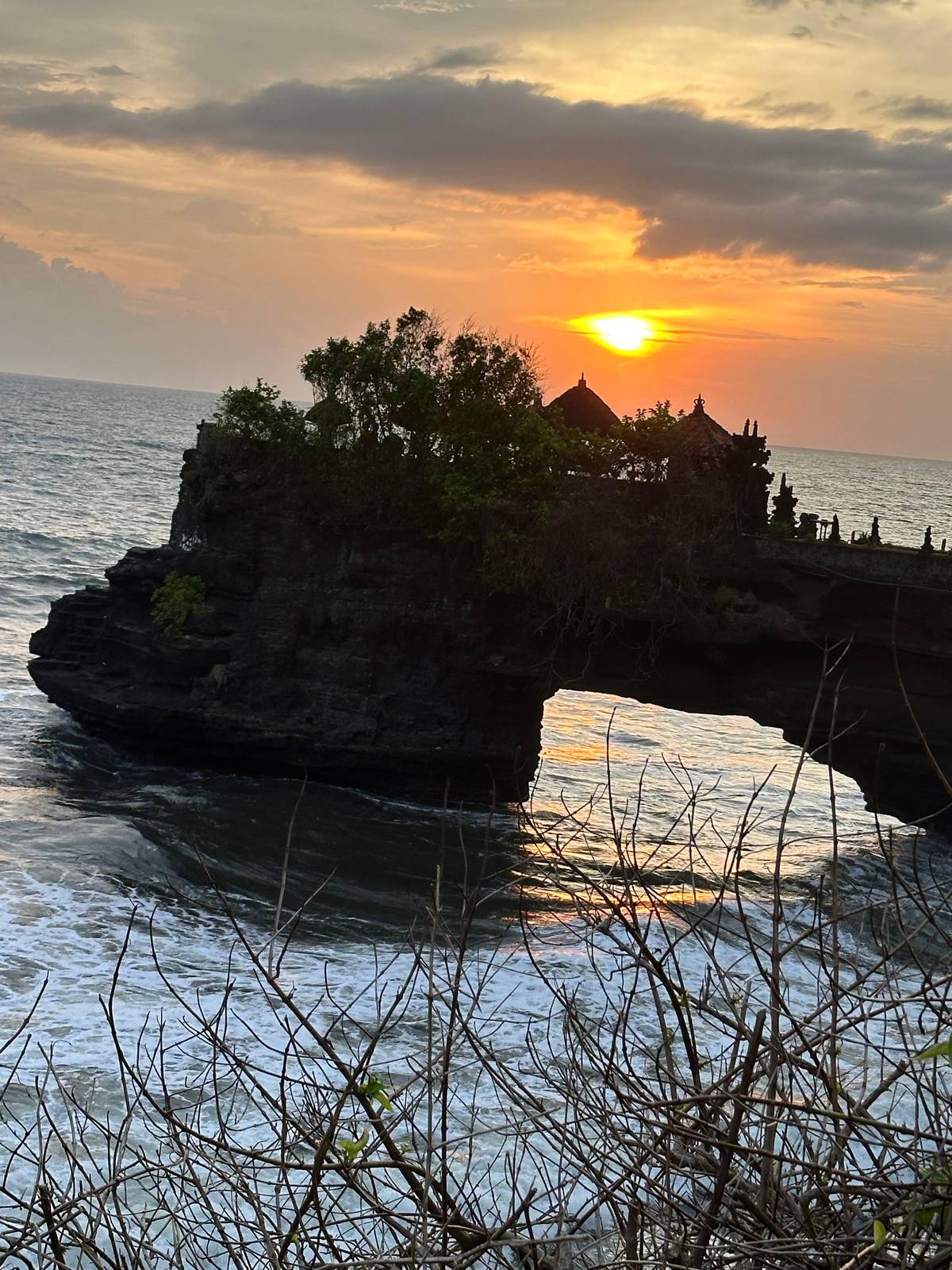
Not everyone welcomed the priest. The official site tells how the headman of Beraban, Bendesa Sakti Beraban, refused his teaching, gathered his followers and drove Nirartha away.13 What happened next is the heart of the legend: the priest protected himself by moving the part of the rock where he sat, and it drifted out to become the small island on which the temple now stands.14
The Ministry of Tourism is careful with this episode. It describes the moving of the rock as mythological tradition, not an event that can be verified as history.31 That is worth keeping in mind when guides or signboards tell it as plain fact. It is a sacred story, and it is told with conviction, but it is a story.
The ending is a reconciliation. The headman, the official site says, came to accept the priest's power and became his follower.32 Before leaving Beraban, Nirartha gave him a kris, a traditional dagger, called Ki Baru Gajah, which is kept today in the former palace of the royal family at Kediri.16
Checklist
Video
The video starts loading once you tap play.
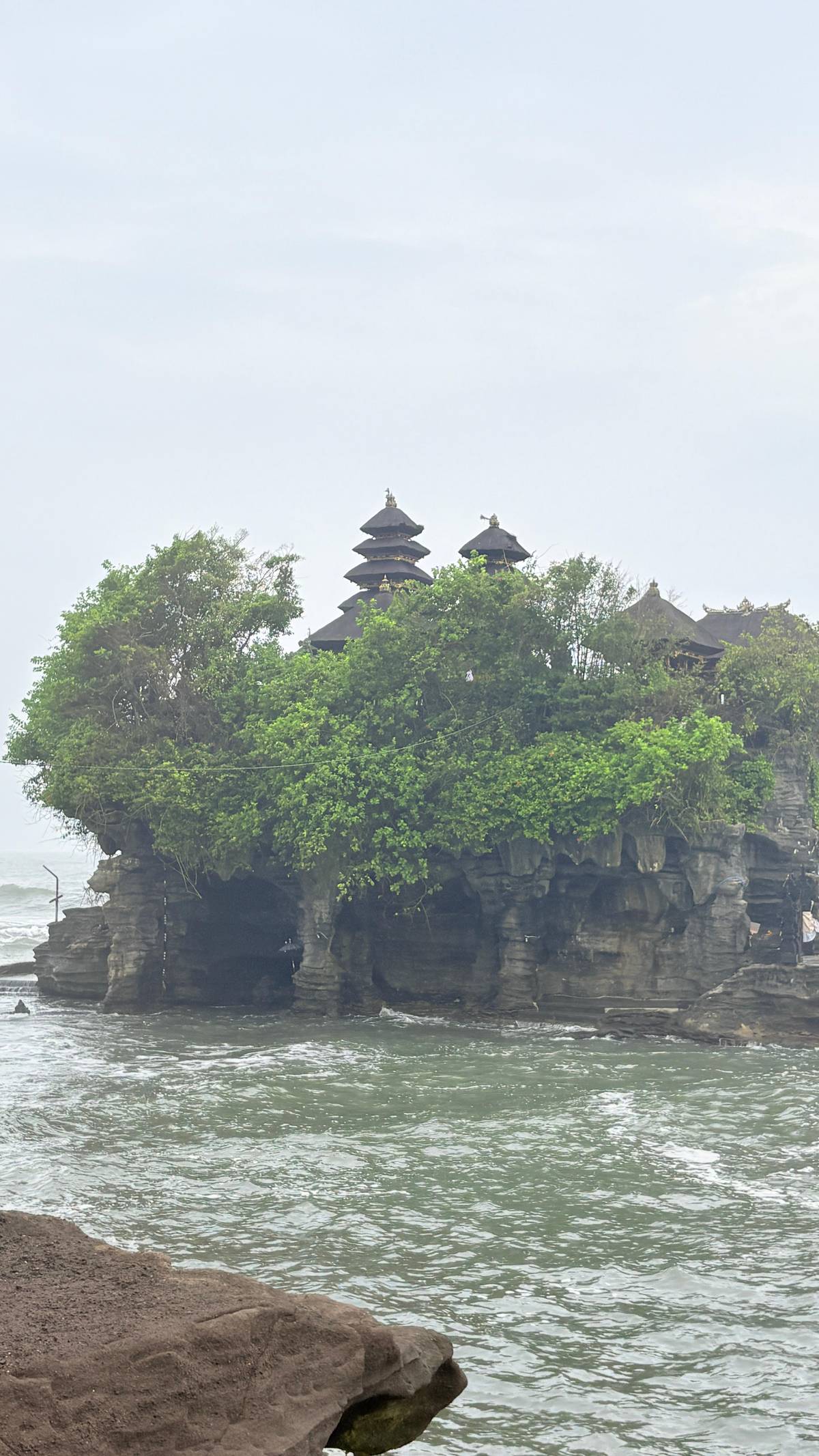
The best-known part of the legend concerns the guardians. The Ministry of Tourism writes that, to protect the temple, Nirartha used his power to create a poisonous snake from his sash, and that the sea snake is believed to live at the base of the rock island, guarding it from evil intruders.154
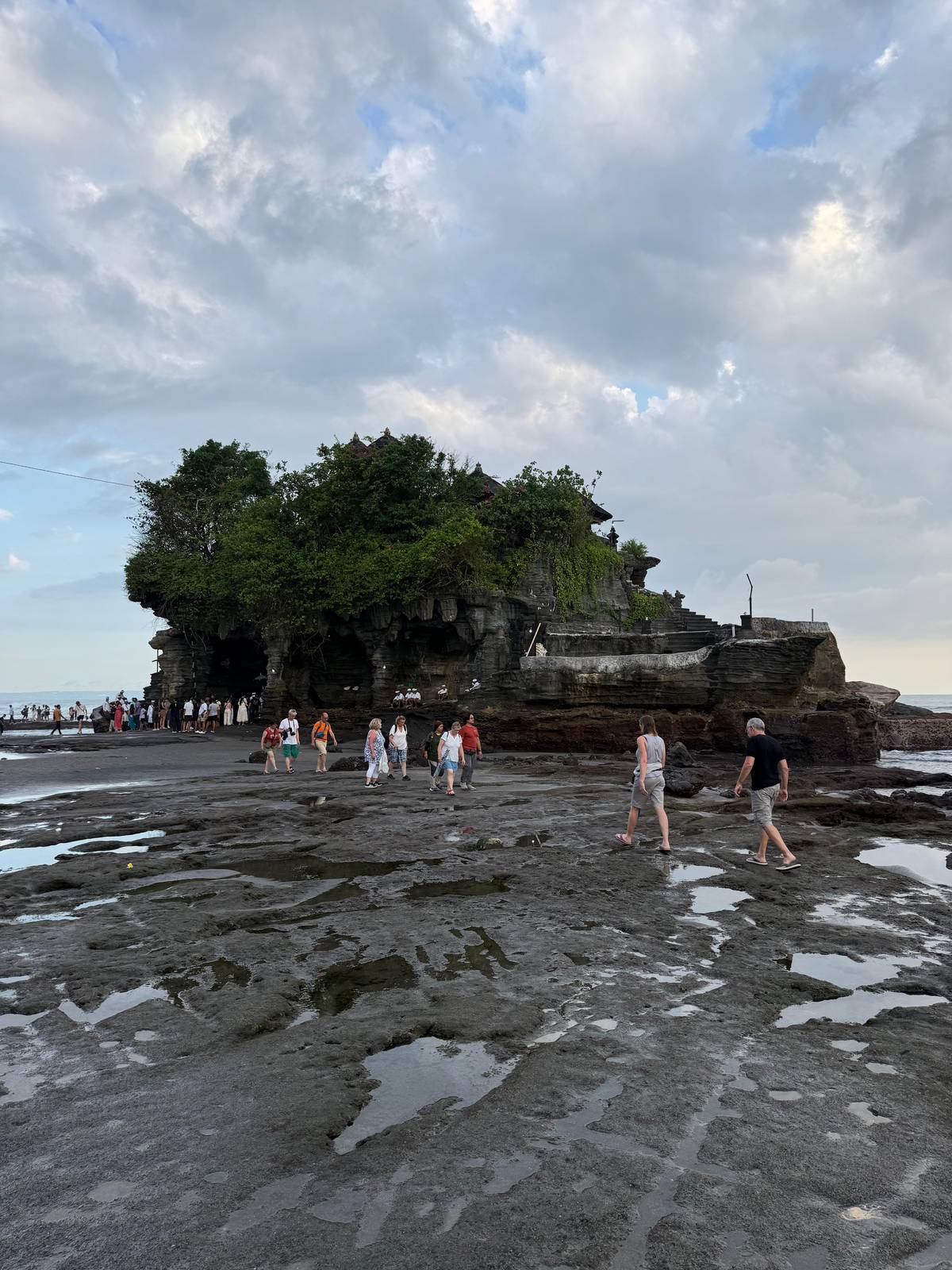
Local tradition speaks of sea snakes living around the caves of the rock as the temple's guardians.29 The same official account stresses that this belongs to belief and folklore and cannot be treated as historical fact.5 If you cross the reef at low tide and spot a snake in the hollows at the foot of the rock, treat it with respect and keep your hands to yourself.
If you visit with children, this is the part of the story that sticks. Tell it as what it is: a legend about a priest whose sash became a guardian, kept alive by the people who still pray here. It makes a better souvenir than anything sold in the lanes on the way down.
Tanah Lot is the most famous shrine on this stretch of coast, but it is not alone. The official site lists a ring of smaller temples, each with its own purpose and its own festival day. Pura Enjung Galuh, on a point reaching into the sea, was built to pray to Dewi Sri, the goddess of prosperity.25 Pura Jro Kandang is the place to worship the god who rules crop pests such as rats and rice-eating birds.26
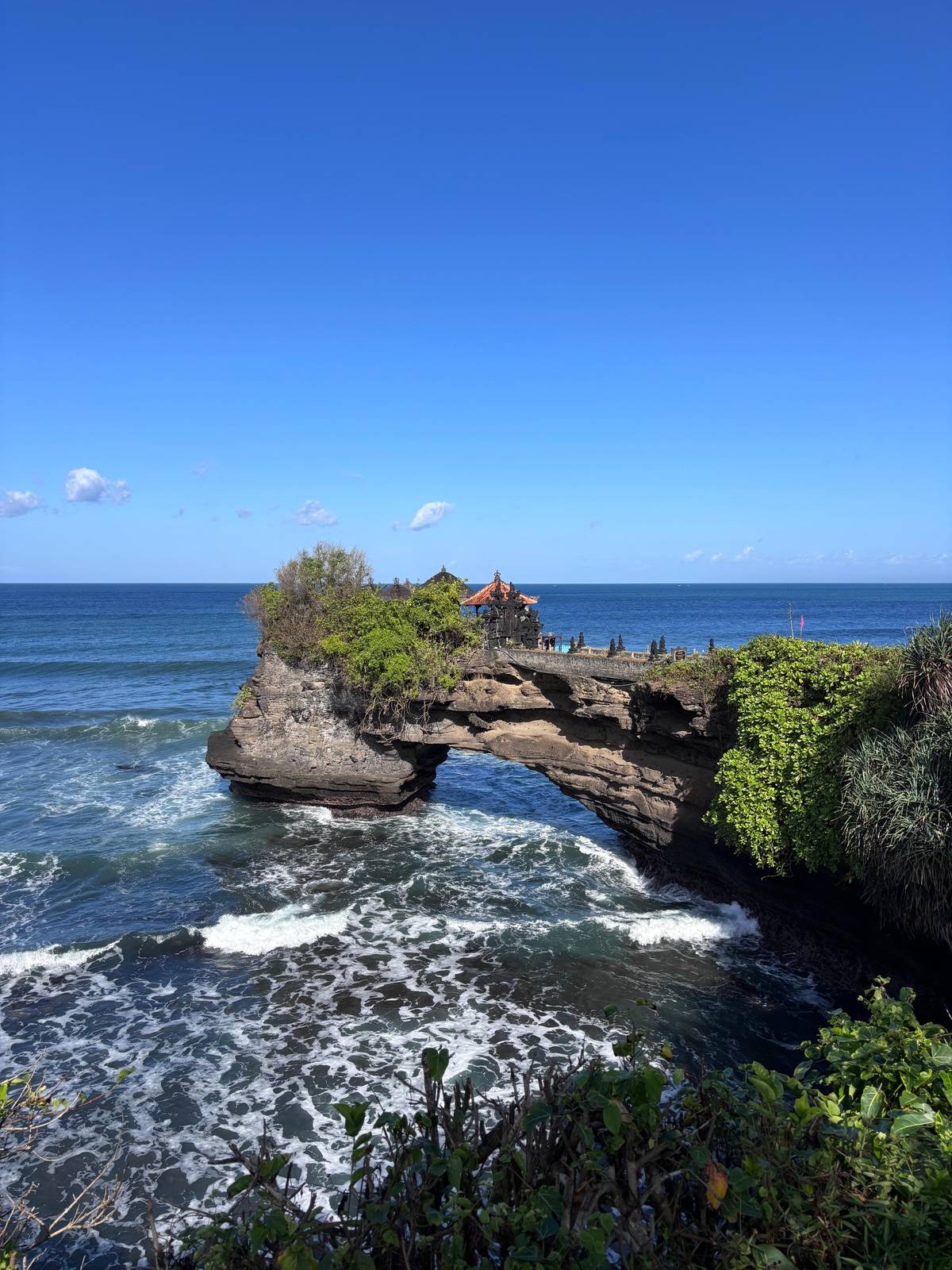
Pura Batu Mejan, also called Beji temple, stands 100 m west of Batu Bolong and is the site of a holy spring used for purification, the Ministry of Tourism says.3323 Pura Batu Bolong itself sits on a rock with a hole through its middle, and during the Pakelem sacrifice ceremony the offered animal is drowned around that rock.3421
Together these shrines show what the sea temple is part of: a farming community that prays for its fields and its water as well as to the sea. Walking from one to the next takes little time, and it turns a photo stop into a short lesson in how Balinese villages divide their worship.
Balinese temples keep time by the Pawukon calendar, a cycle of 210 days.6 The ministry gives the anniversary festival, the pujawali, of Pura Luhur Tanah Lot as falling every 210 days on Budha Wage Langkir.6 On that day, the ministry's English page says, rows of Balinese women carry offerings on their heads to pray at the temple.35
The kris of the legend has a role of its own. Every 210 days the official site describes a festival at Pura Pakendungan, about 300 m north-west of Tanah Lot, and a procession that carries the kris Ki Baru Gajah from Kediri to Pakendungan, a distance of about 11 km.2836 Pakendungan also serves as the Pengulun Subak temple of Kediri district, the temple of the local irrigation societies.27
If your visit falls on a festival day, you will see the temple at its most alive and its most crowded with worshippers. Visitors are asked to give priority to prayer and to respect the rules on clothing, photography and access to sacred spaces.37 Ask your guide whether a ceremony is due, and plan to watch from the edge.
The newest chapter of Tanah Lot temple history is an engineering one. In the 1980s the rock face began to crumble, and Wikipedia records that more than one-third of the rock you see today is artificial rock, added in a stabilisation programme funded by Japan.3830 The work is hard to spot: the new rock was made to blend in.30
The site around the temple has grown too. The official site gives the Tanah Lot area as 28.58 hectares, with temples, housing, accommodation, offices, gardens, parking, rice fields and roads.39 You walk to the shore through a long lane of souvenir shops, and a museum now introduces the Majapahit background before you reach the sacred area.4020
None of this has changed the temple's purpose. People still come from across Bali to pray here, and the access rules exist because parts of the site remain sacred space.41 Read the legends, enjoy the view, and remember that for many of the people around you this is a place of worship first.
Your day in the west
Hotel pick-up in south Bali or Ubud, a live guide, free cancellation up to a day before.
Bhatara Segara, the sea god. The Ministry of Tourism says the temple was built to worship Bhatara Segara, the god of the sea.1
Dang Hyang Nirartha, by tradition. A priest from the Majapahit era who, the Dwijendra Tattwa says, came to Bali in the 15th century.211
Around the 15th to 16th century. A study published by the Ministry of Education and Culture dates its founding to that period.3
Sea snakes are part of local belief. Tradition places them around the caves of the rock; the ministry calls the story folklore.295
That is legend, not history. The Ministry of Tourism calls it mythological tradition that cannot be verified historically.31
The dagger Nirartha gave the headman. It is kept in the former royal palace at Kediri and carried in procession to Pakendungan.1636
Every 210 days. The pujawali of Pura Luhur Tanah Lot falls on Budha Wage Langkir in the Pawukon calendar.6
Sources