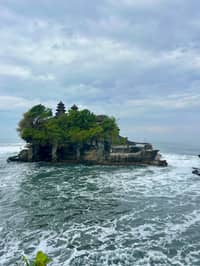
 Up close
Low tide
Walk to the rock's foot
- Access
- On foot
- Bring
- Shoes that grip
- Watch for
- The returning sea
Guides
Language
EnglishCurrency
US dollar · $GetYourGuide uses the currency you choose.
Guide · Tides
Whether you stand at the foot of the sea temple or watch it from the cliffs depends on the water. Here is how the tide works at Tanah Lot temple at low tide and high, and how to plan around it.
Editorial team, tanahlottempletour.comUpdated October 23, 2026Reading time about 6 minutes44 sources
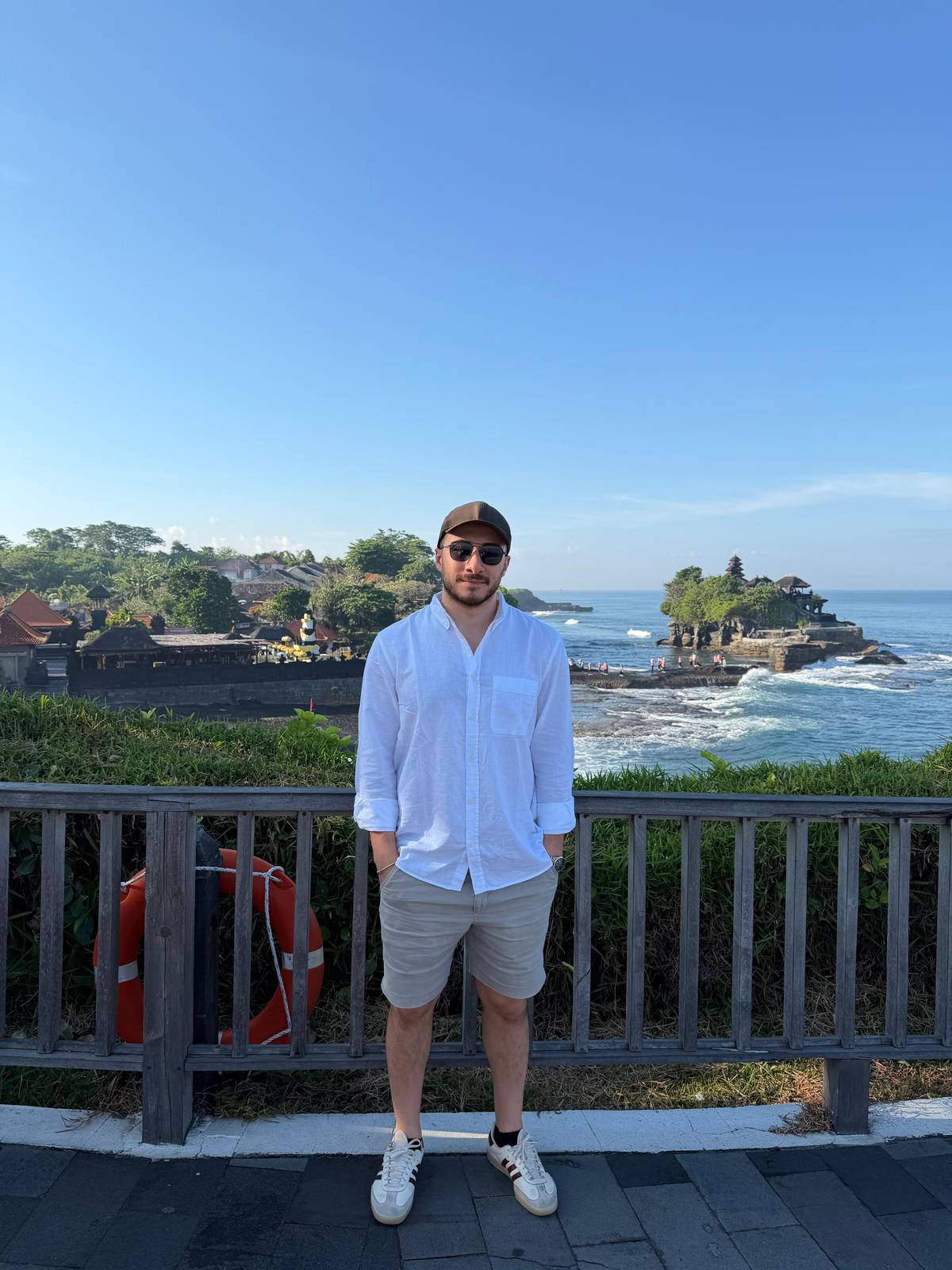
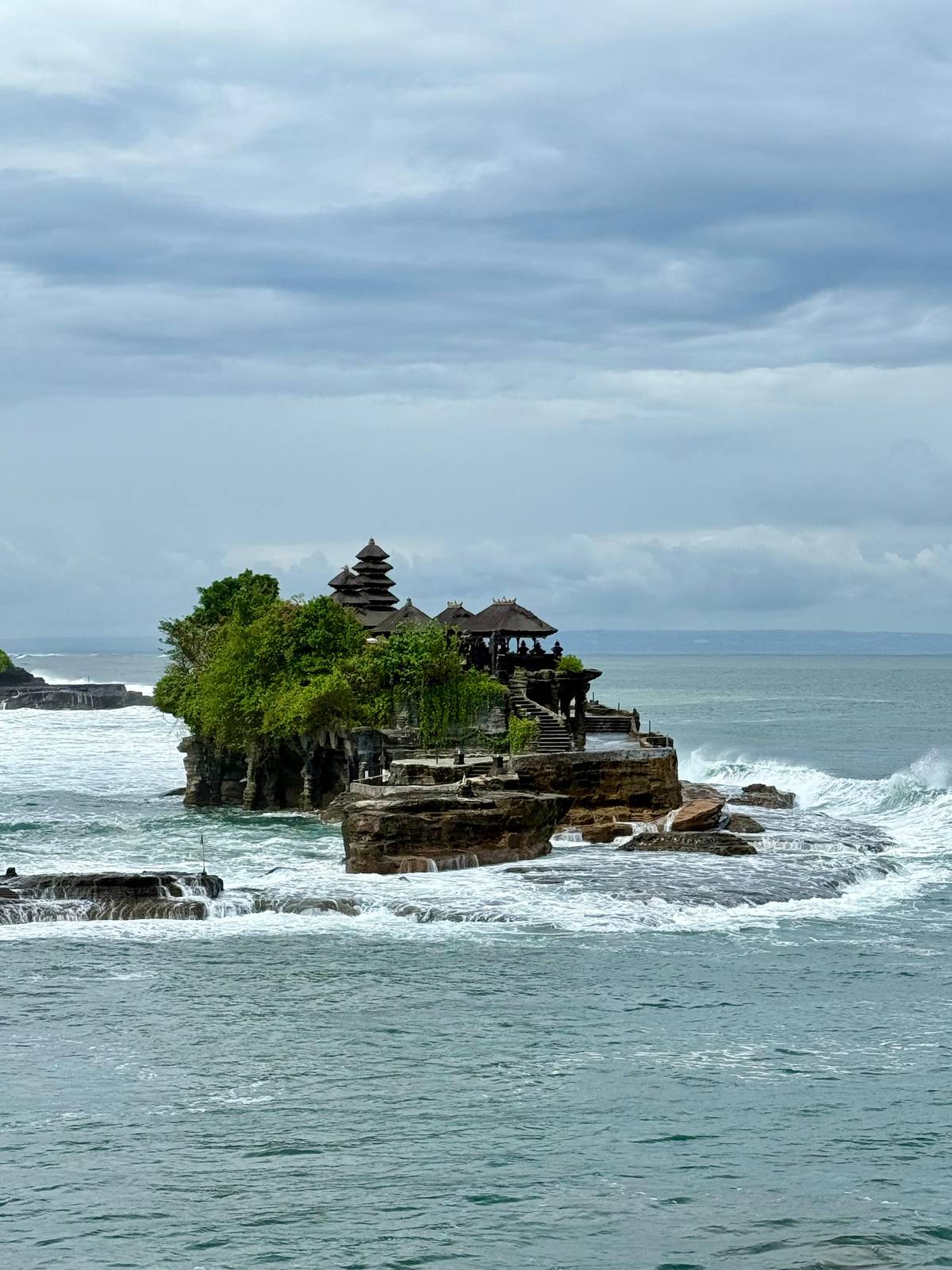
Tanah Lot is a sea temple in the literal sense: its shrines stand on a rock just off the shore, and the name itself means land in the sea.7 Wikipedia describes it as an offshore rock that can be reached on foot only at low tide.1 The Ministry of Tourism puts it the other way round: at high tide the sea surrounds the rock, while at low tide part of the way across from the land opens up.2
That single fact shapes the whole experience. At low water you can walk across the dark reef to the base of the rock, see the caves where the holy sea snakes are said to live and stand at the foot of the temple.8 At high water you watch from the cliffs and the gardens while the surf breaks around the temple. The ministry notes that the temple looks cut off from land at high tide and is easier to see up close when the sea is low.9
Neither is a lesser visit. Many of the most dramatic photographs of Tanah Lot are taken with the sea all around it, and the reef can be slippery and crowded when it is open. But if standing at the foot of the temple is what you came for, check the tide before you choose your day and your hour.
One tidal cycle
High water
The sea surrounds the rock on every side.2
Falling
About six hours and 12.5 minutes from high to low.10
Low water
Rising
Follow the safety instructions as the sea returns.6
Next high
High tides come 12 hours and 25 minutes apart.12
Tides follow the moon more than the sun. The US National Ocean Service explains that most coastal areas have two high tides and two low tides each day, that high tides come 12 hours and 25 minutes apart, and that the water takes about six hours and 12.5 minutes to fall from high to low or rise from low to high.31210
The cycle is tied to the lunar day, which lasts 24 hours and 50 minutes, so the times of high and low water drift later from one day to the next.45 A low tide that suits you today will come later tomorrow. A tour runs to the clock and the sea does not: no listing can promise you the reef.
The heights differ through the month as well. The US National Ocean Service calls the largest swings spring tides, which come with the new and the full moon, and the smallest neap tides, at the first and third quarter.1314 When the two daily highs or lows are of different height, the pattern is called mixed semidiurnal.15 Around a full or new moon, low water drops further and exposes more reef.
High or low
| At the temple | Low tide | High tide |
|---|---|---|
| The rock | Reached on foot | Surrounded by sea |
| Best view | Up close from the reef | From the cliffs and gardens |
| Spring at Batu Mejan | Visible on the beach | Under water |
| Penataran Madya | Quiet | Worship especially now |
| Crowds | On the reef | On the cliff paths |
From the official Tanah Lot site and the Ministry of Tourism; follow the staff as the water rises.12916176
Three kinds of visit
Up closeWalk to the rock's foot
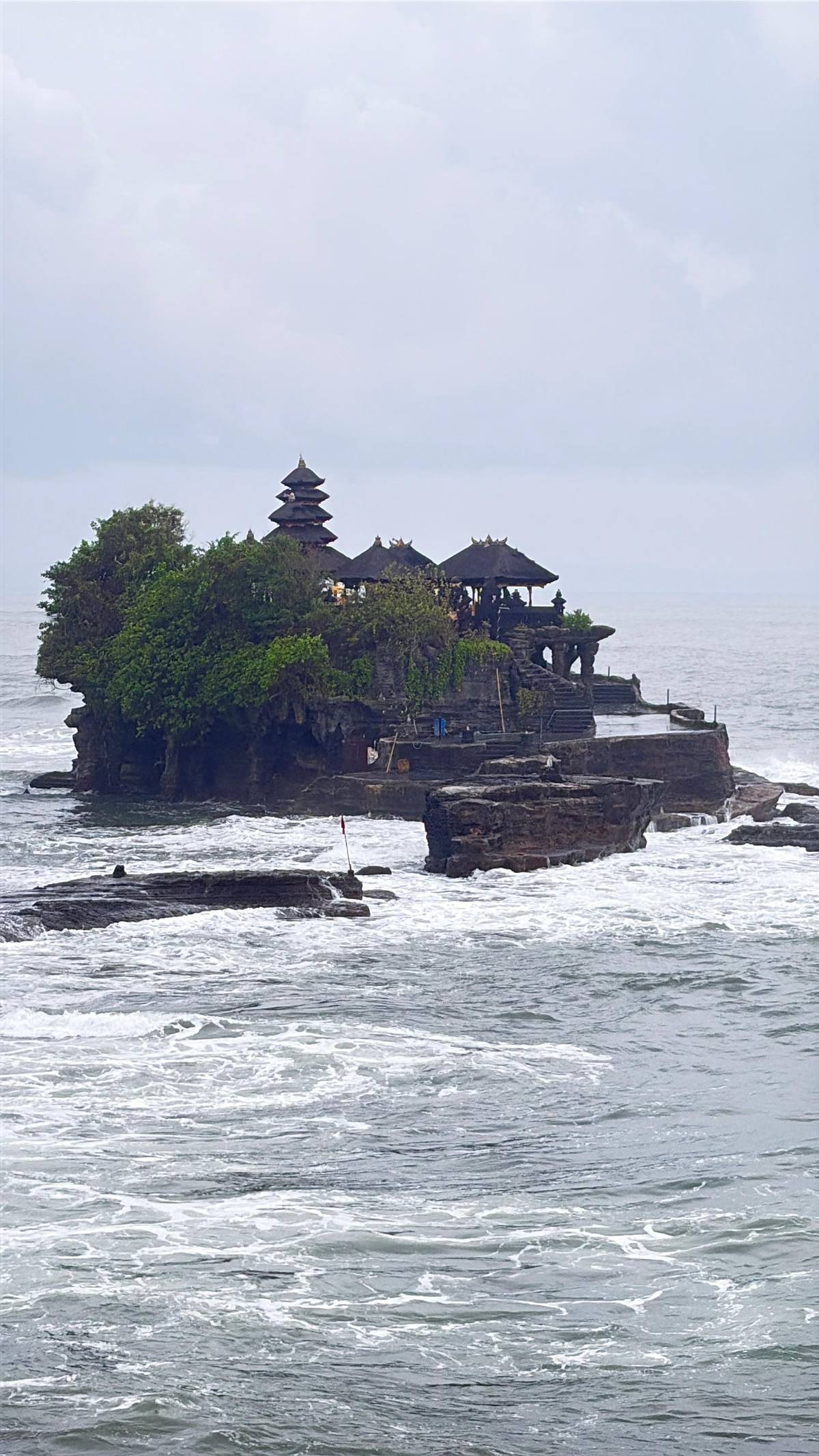 Classic photo
The rock alone in the surf
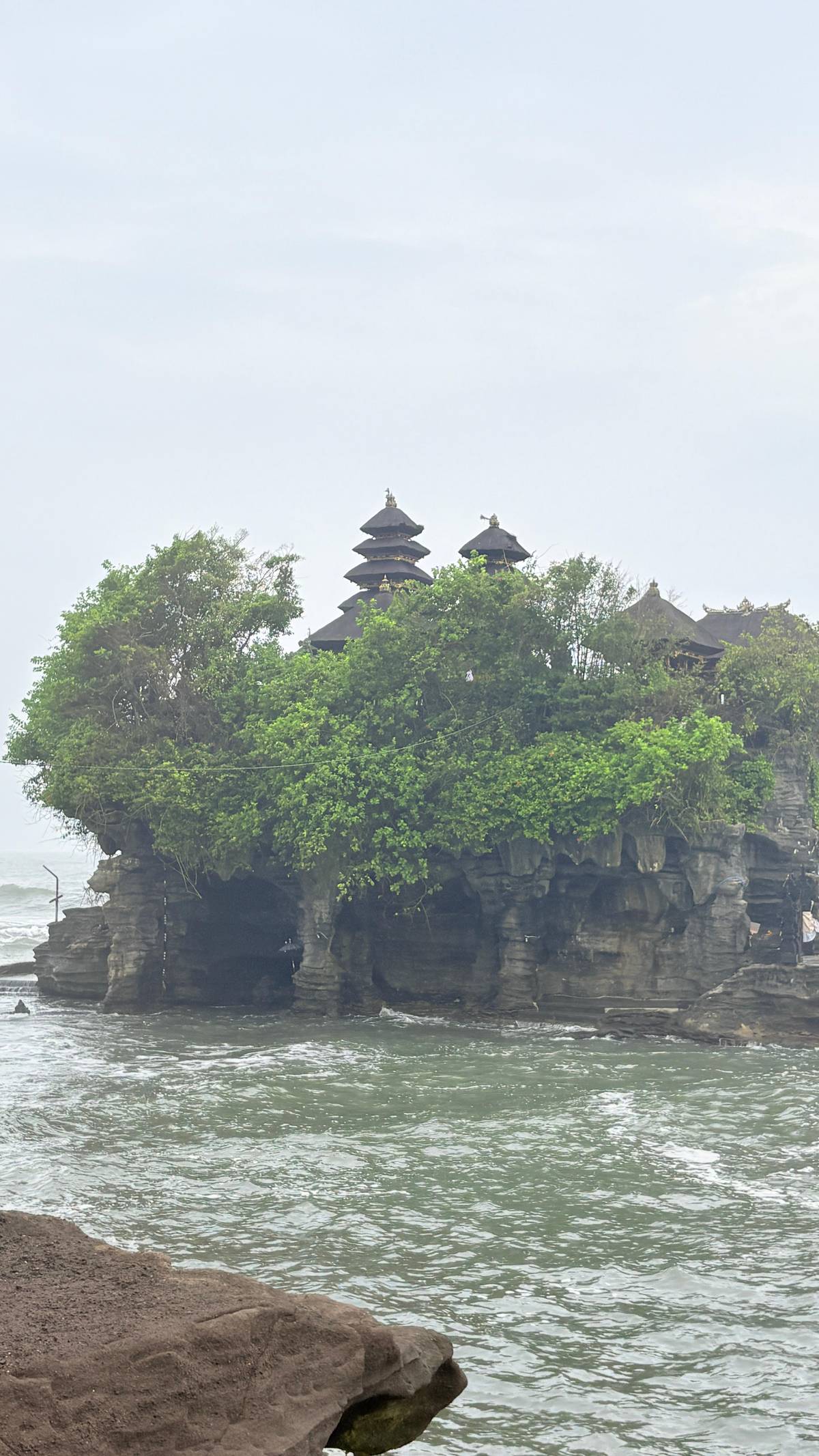 Most reef
Near new or full moon
Decision helper
Match the hour to what you want to do
Only then can the rock be reached on foot.1
The temple then looks cut off from the land.9
Spring tides bring the lowest lows of the month.13
The ministry suggests coming very early for smaller crowds.18
Enjung Galuh shows the temple well at any water level.19
Most coastal areas, with some exceptions, experience two high tides and two low tides every day.
With the reef exposed you can walk from the beach towards the base of the temple rock. The Ministry of Tourism notes that the state of the tide decides access to that base.11 Do not expect to climb into the temple itself: visitors must follow the restrictions of the management and the temple custodians, because parts of the site are sacred space reserved for worship.20
Around the temple you meet a pair of traditions. The official site describes a holy spring believed to rise from the middle of the sea, from which visitors may drink or wash their hands and faces.2122 Local tradition also places the guardian sea snakes in the caves of the rock, a belief the ministry is careful to call folklore rather than history.823 Our page on the temple story tells that legend in full.
A little further along the shore, low water reveals another spring. South of Pura Batu Mejan, the official site says, a spring becomes clearly visible on the beach when the sea drops.16
Map
The temples on the rocks around Tanah Lot, the drive in from south Bali and Ubud, the highland stops of the full-day tour, and Uluwatu at the other end of the coast.
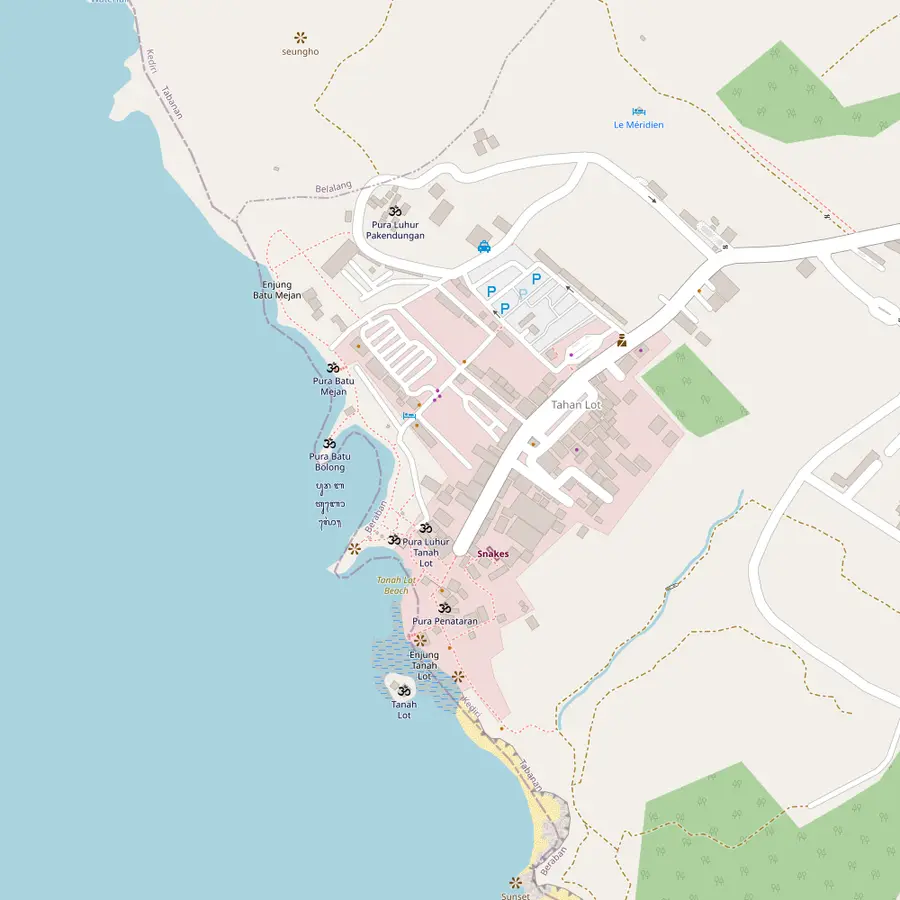 1Tanah Lot2Pura Batu Bolong3Pura Batu Mejan4Pura Enjung Galuh5Pura Jro Kandang6Pura Penataran7Pura Luhur Pakendungan8Ticket counter
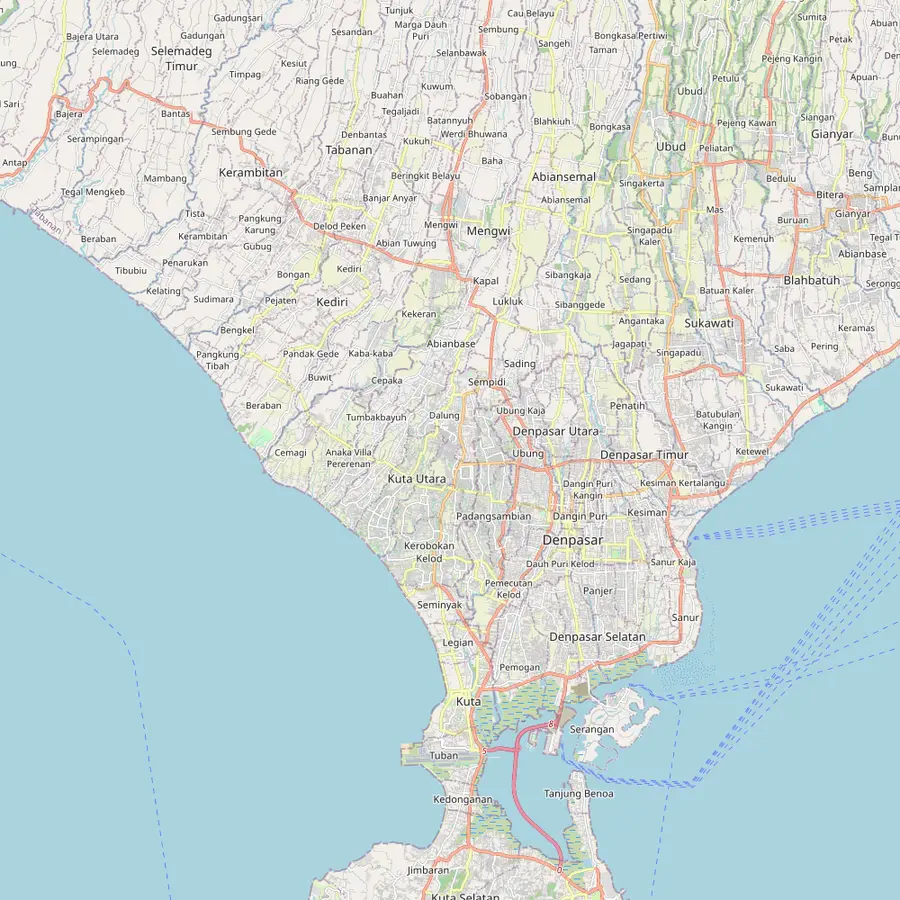 1Tanah Lot9Kediri10Canggu11Seminyak12Kuta13Ngurah Rai Airport14Denpasar15Ubud
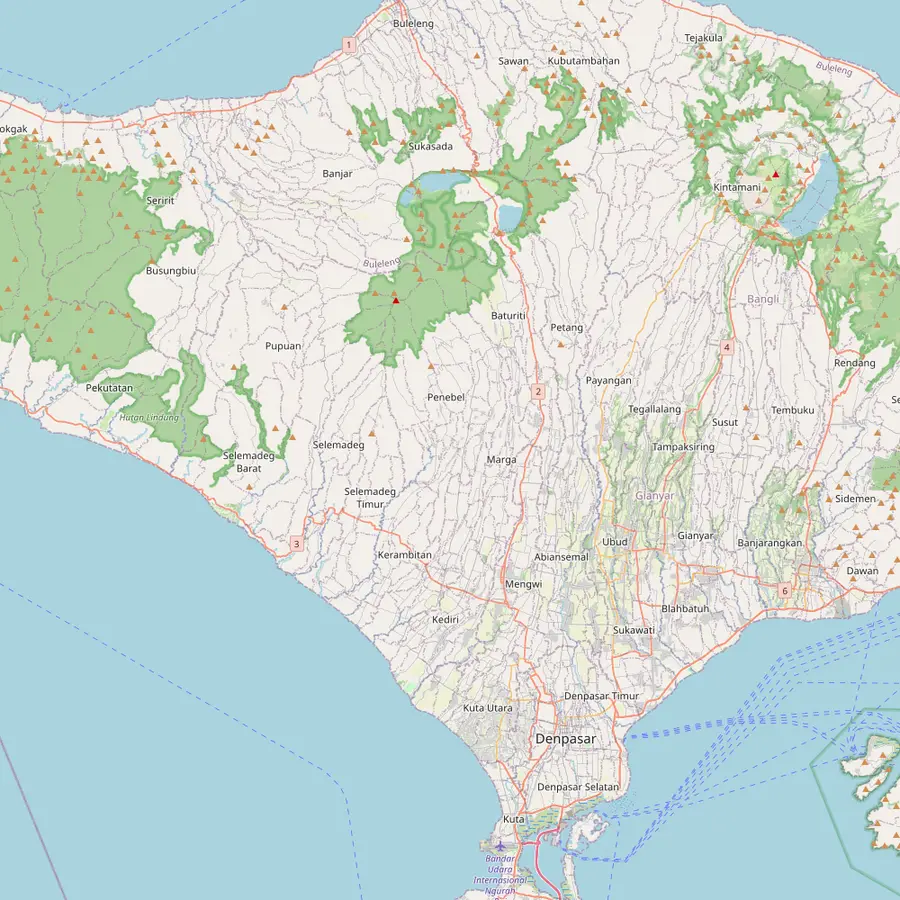 1Tanah Lot16Pura Taman Ayun17Jatiluwih18Pura Ulun Danu Beratan
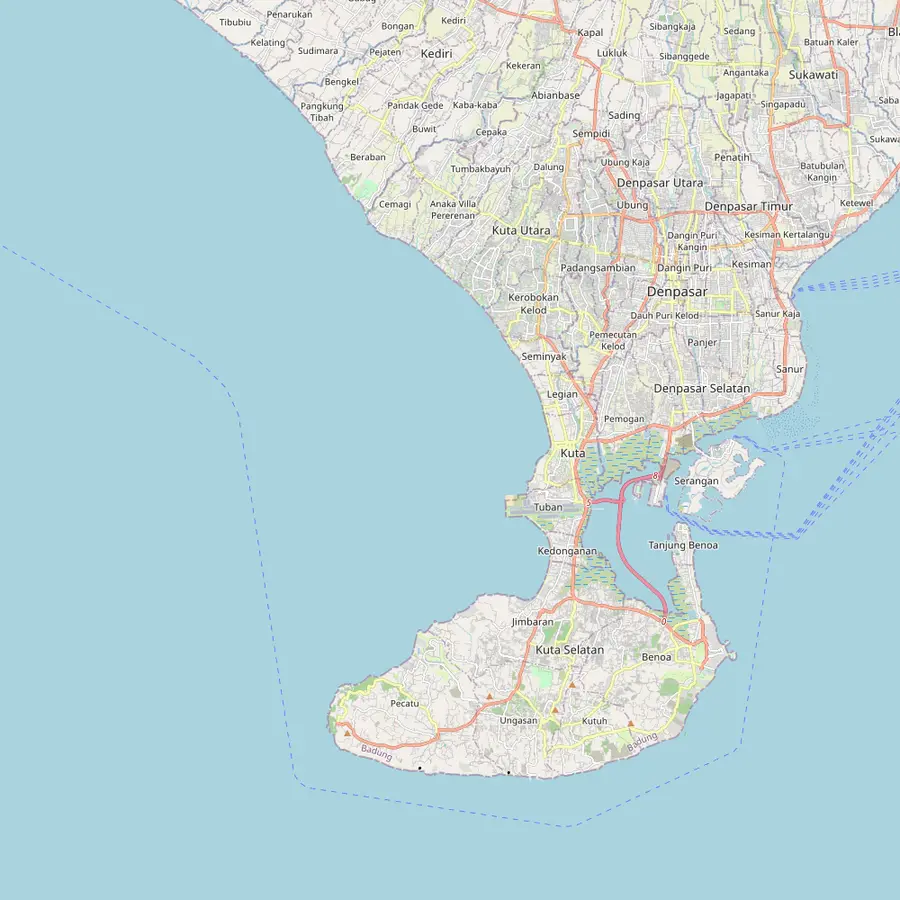 1Tanah Lot19Pura Luhur Uluwatu20Jimbaran12Kuta13Ngurah Rai Airport
The sea temple on its rock, reached on foot only at low tide.124
In Google Maps ↗A shrine on a rock with a crescent-shaped hole, loved at sunset.2526
In Google Maps ↗Also called Beji temple; a spring shows on the beach at low water.2716
In Google Maps ↗A temple for Dewi Sri on a point that is a fine sunset spot.2829
In Google Maps ↗Where farmers pray to the god who rules crop pests.30
In Google Maps ↗Its Madya shrine sees worship above all at high tide.17
In Google Maps ↗Its festival every 210 days brings the sacred kris from Kediri.3132
In Google Maps ↗Foreign adults pay IDR 75,000 by the official price list.33
In Google Maps ↗The large sign at its main crossroads marks the turn to Tanah Lot.34
In Google Maps ↗One of the pick-up areas of the full-day tour.
In Google Maps ↗Another pick-up area for the tour booked here.
In Google Maps ↗Free pick-up area of the half-day sunset trip as well.
In Google Maps ↗About 30 km from Tanah Lot, says the Ministry of Tourism.35
In Google Maps ↗Tanah Lot lies 20 km to its north-west.36
In Google Maps ↗Pick-up there too; the highland loop also meets at Ubud Palace.
In Google Maps ↗The royal water temple inside the UNESCO subak listing.37
In Google Maps ↗Rice terraces in the Catur Angga Batukaru heritage area.38
In Google Maps ↗On Lake Beratan near Bedugul, built in 1633.3940
In Google Maps ↗A cliffside temple 70 m above the Indian Ocean.41
In Google Maps ↗On the south-coast day that pairs Uluwatu with Tanah Lot.
In Google Maps ↗Checklist
Video
The video starts loading once you tap play.
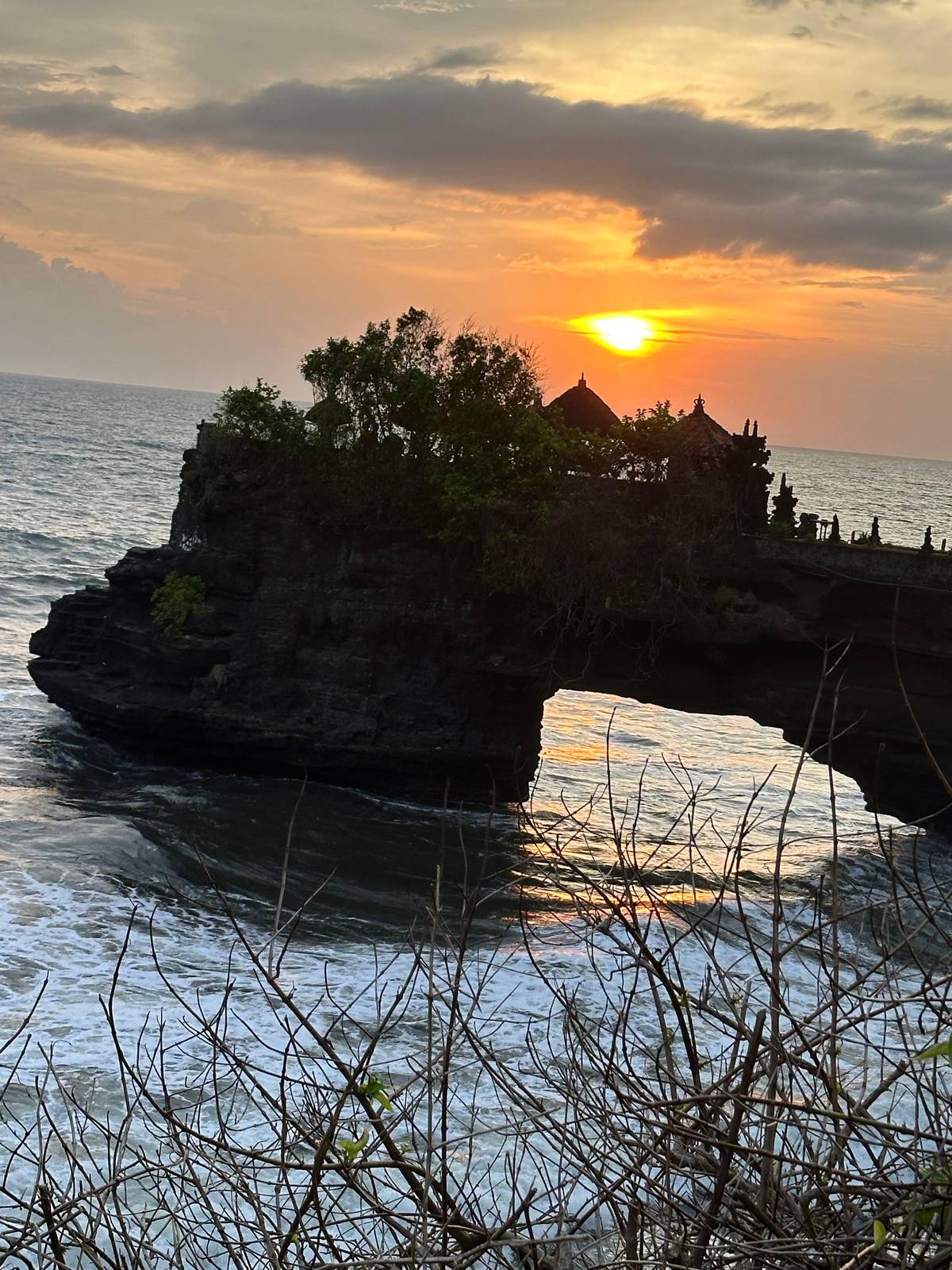
Tanah Lot at high tide is a different place. The rock stands alone in the surf, the reef disappears under foam and the crowd moves up to the cliff paths and the gardens. This is when the temple looks most like the land in the sea of its name.
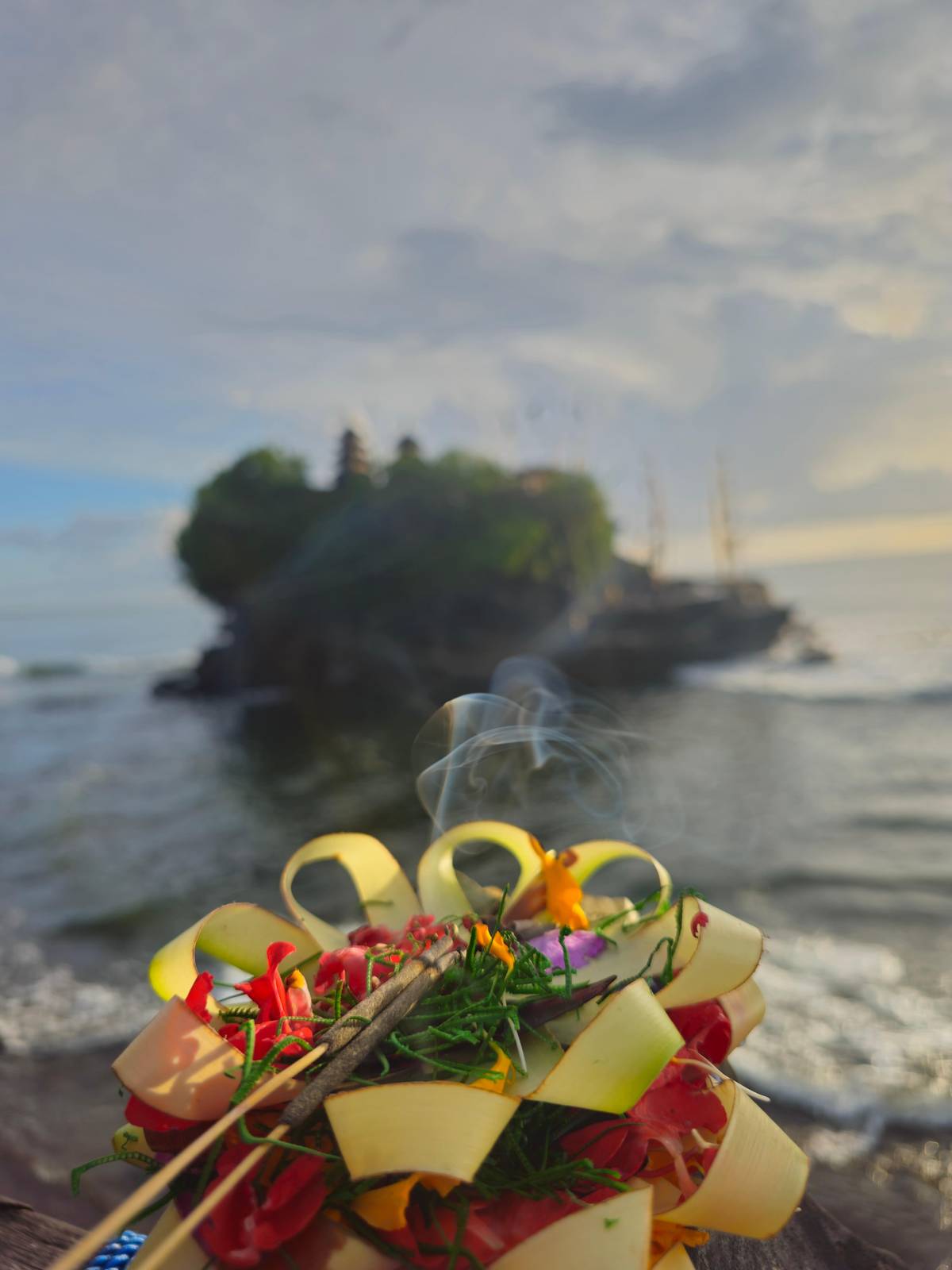
High water also has a ritual meaning here. The official site says the small Penataran Madya temple was built for worship of God as the Lord of the Sea, and that worship is held there especially at high tide.17 If you arrive to find people praying at the shore with the sea high, keep your distance and your voice down, as you would in any temple.
The rock itself has needed help. In the 1980s its face began to crumble, and more than one-third of what you see today is artificial rock added in a stabilisation programme funded by Japan.4243
Start with a tide table for the coast near Tanah Lot, which you can find in any good marine weather app or on Indonesia's official meteorological service. Look for a low tide that falls inside the window your tour or your driver spends at the temple. The full day booked on this site lists 1.5 hours at Tanah Lot, the sunset trip 2 hours.
If the low tide falls at midday and you are set on the reef, a morning or midday visit beats the sunset. The ministry recommends very early mornings for fewer people anyway.18 If low water comes near dusk, you may get both the reef and the silhouette, which is the rare evening every photographer hopes for.
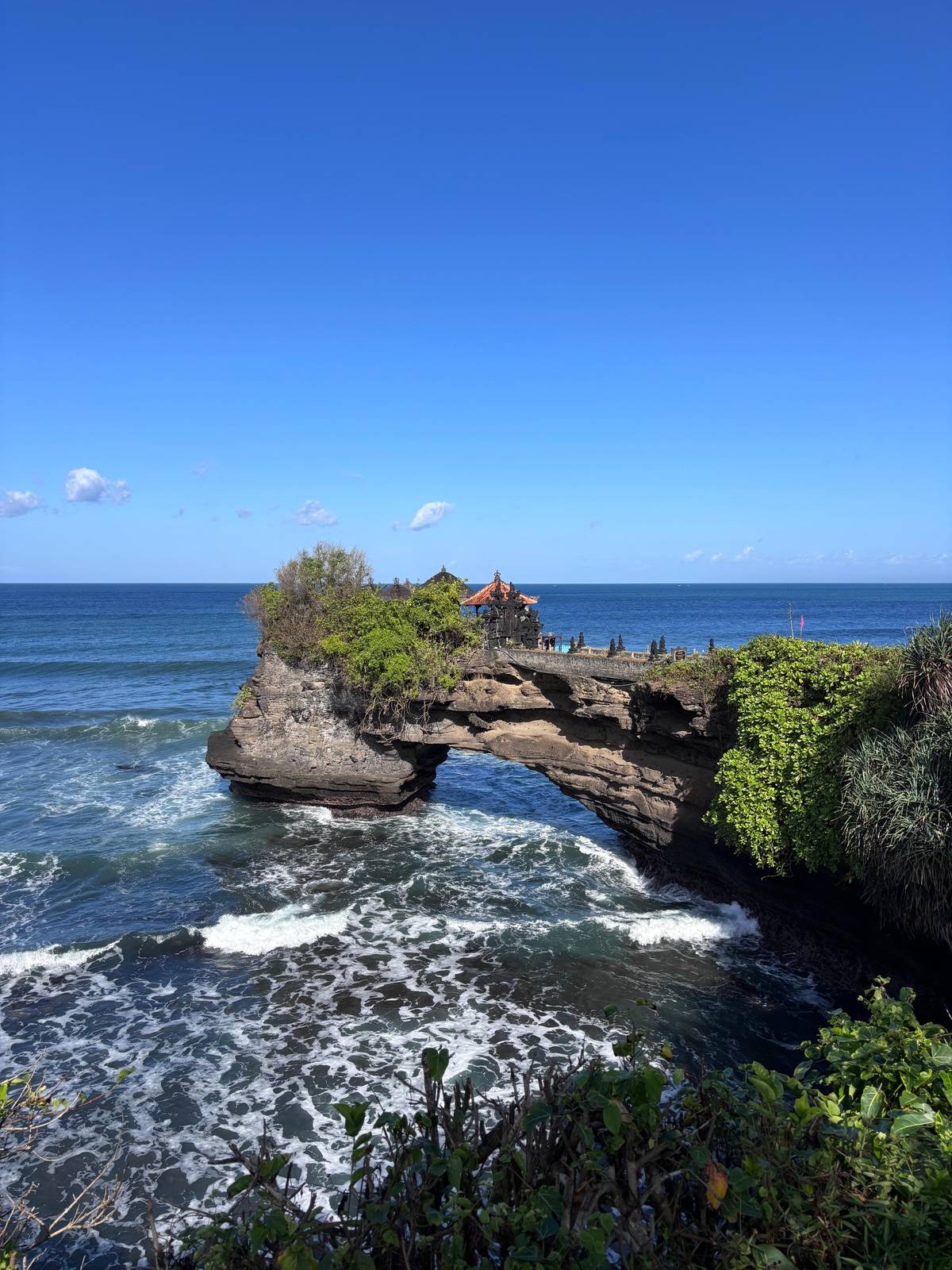
If the tide is high whenever you can come, do not cancel. Walk the cliff paths north of the temple, look across to Batu Bolong and its arch, and visit the smaller shore temples instead.44 The official site recommends the Enjung Galuh area for its many angles on the temple, and that view is at its best with the sea up.19
A tide table lists each high and low water with a time and a height. For Tanah Lot you only need the lows: note the time, then mark the hour on either side of it as your window for the reef. The water takes about six hours and 12.5 minutes to come back in, so the crossing does not slam shut, but it narrows well before the next high.10
Compare the heights of the lows across the days of your trip. The lowest numbers fall near the new and the full moon, when spring tides bring higher highs and lower lows.13 A low with a small figure exposes more reef than one marked only a little below the average, and it stays open longer.
Then lay your other plans over the table. If the best low falls on the morning of the day you planned for the highland temples, swap the days around, or ask your driver to reverse the order of the day. A tide table costs nothing to check, and it makes the difference between looking at the rock and standing beneath it.
The reef in front of the rock is uneven stone covered in weed and pools. Wear shoes or sandals that grip when wet, keep your phone in a zipped pocket, and watch the incoming sets rather than your screen. The Ministry of Tourism asks visitors to follow the tide, the waves and the safety instructions of the management, because conditions change.6
Follow the staff's instructions as the water rises and leave when they ask, even if the sea still looks calm where you stand: on a rising tide the gap behind you fills first. Children should be held by the hand, and anyone unsteady on their feet is better off on the cliff paths.
The operator of the tour booked here rules it out for guests with mobility impairments. If the reef looks hard going, the view from above carries none of its risk and, at high tide, is often the better one.
Your day in the west
Hotel pick-up in south Bali or Ubud, a live guide, free cancellation up to a day before.
Only at low tide. The rock can be reached on foot only at low tide; at high tide the sea surrounds it.12
No, parts are reserved for worship. The management and the temple custodians restrict access to the sacred areas.20
Usually twice a day. Most coasts have two lows a day; high tides come 12 hours and 25 minutes apart.312
Because of the lunar day. A tidal day lasts 24 hours and 50 minutes, so the times shift later every day.45
Near new and full moon. Tide scientists call them spring tides; neap tides at the quarter moons are milder.1314
Sources