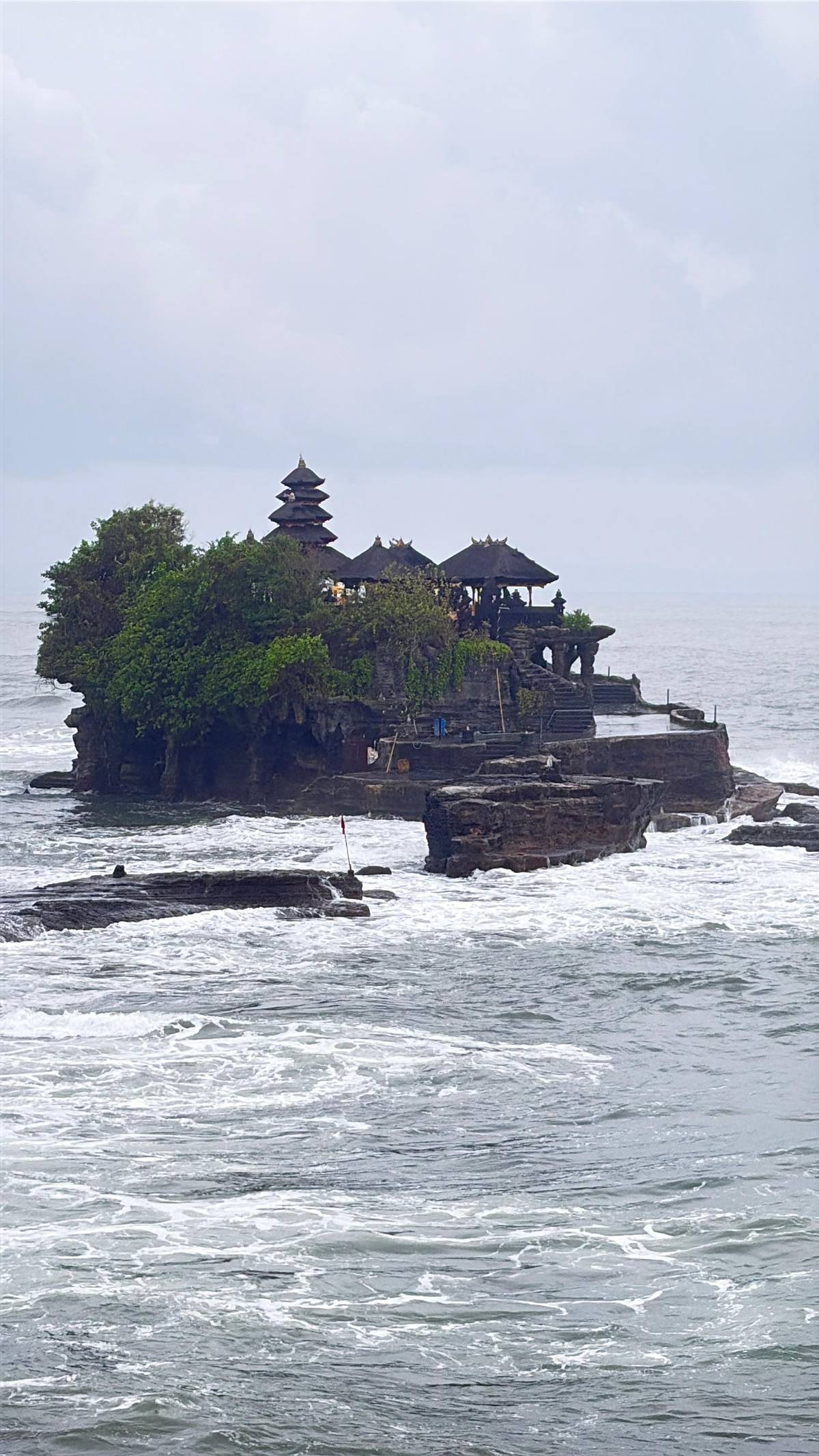
 Fewest people
Guides
Language
EnglishCurrency
US dollar · $GetYourGuide uses the currency you choose.
Guide · Best time
The best time to visit Tanah Lot, month by month
The best time to visit Tanah Lot depends on three clocks: the season, the hour of the day and the tide. Here is how each one changes the visit, with the rainfall and temperatures month by month.
Check availabilityfrom $35 · no cancellation fee
Editorial team, tanahlottempletour.comUpdated October 23, 2026Reading time about 6 minutes19 sources
In a nutshell
Dry months and wet months on Bali
Bali has no spring or autumn in the European sense. The Ministry of Tourism describes a dry and a wet season for most of Indonesia, Bali included, with the dry months running April to October and the rains November to March.1 It also concedes that a warmer climate has blurred those borders, so treat the dates as a guide rather than a promise.6
The climate record for Denpasar, about 15 km east of Tanah Lot, shows how big the difference is.2 January brings 345 mm of rain on average and February 274 mm, while August brings only 25 mm and September 47 mm.2 These are averages for 1961 to 1990 published by Indonesia's meteorological agency through the World Meteorological Organization.2
Temperatures barely change. Average highs on the Denpasar record run from 29.6 °C in August to 34.4 °C in April, and average lows stay between 22.5 °C and 24.8 °C all year.2 Whatever the month, plan for heat in the middle of the day and dress lightly, with a sarong for the temple grounds.
Month by month at the sea temple
From April to October the dry season gives you the best chance of a clean sunset and a calm day on the highland stops of a full-day tour. April is the hottest month on the record, with average highs of 34.4 °C, but also the start of the drier months, with 88 mm of rain.2 June, July and August are the coolest stretch, and dry, with 53 mm, 55 mm and 25 mm of rain and average highs of 31.4 °C, 30.4 °C and 29.6 °C.2
September and October stay fairly dry, with 47 mm and 63 mm, and the heat returns, with October highs of 33.6 °C.2 November marks the turn: 179 mm of rain on average, and December 276 mm.2 The wettest months are January and February, when showers and cloud are a real risk for any evening plan.2
Rain is not a reason to skip Tanah Lot. Showers can pass quickly, and the temple looks dramatic under a heavy sky. If you visit in the wet season, keep a second day free and check the forecast the evening before. On a tour, the free cancellation window gives you room to move the date if a stormy day is forecast.
Rain by month
Average monthly rainfall near the temple, in mm
mm
Month by month
Heat and rain through the year
Three hours to choose from
Dawn, low tide or sunset
Fewest people Up close
Low tide
Whenever the sea allows
- Crowds
- On the reef
- Access
- On foot
- Best for
- The rock's foot
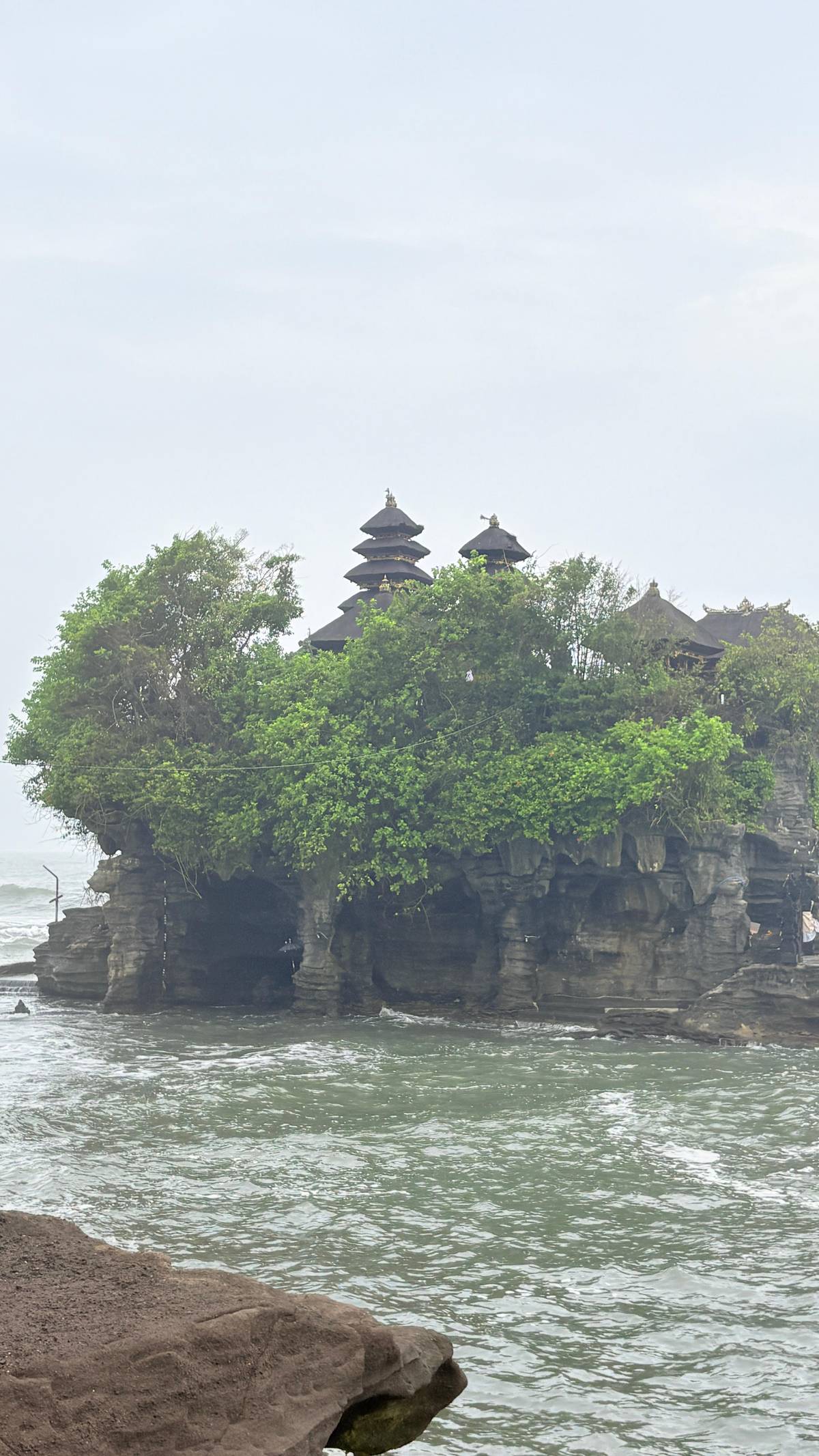 Classic
Decision helper
When should you go?
Pick the line closest to your priorities
April to October
The dry season, by the Ministry of Tourism's dates.1
Keep a spare day
The wettest months, with 345 mm and 274 mm on average.2
Early morning
Fewer people and a calmer view, says the ministry.3
At low tide
It is the only time the rock can be reached on foot.5
On a pujawali day
The pujawali falls every 210 days, on Budha Wage Langkir.7
Although famous for its sunset view, you may also want to try coming at really early in the morning, so that there will be less crowd and higher chance to have a serene image of the temple.
The best hour of the day
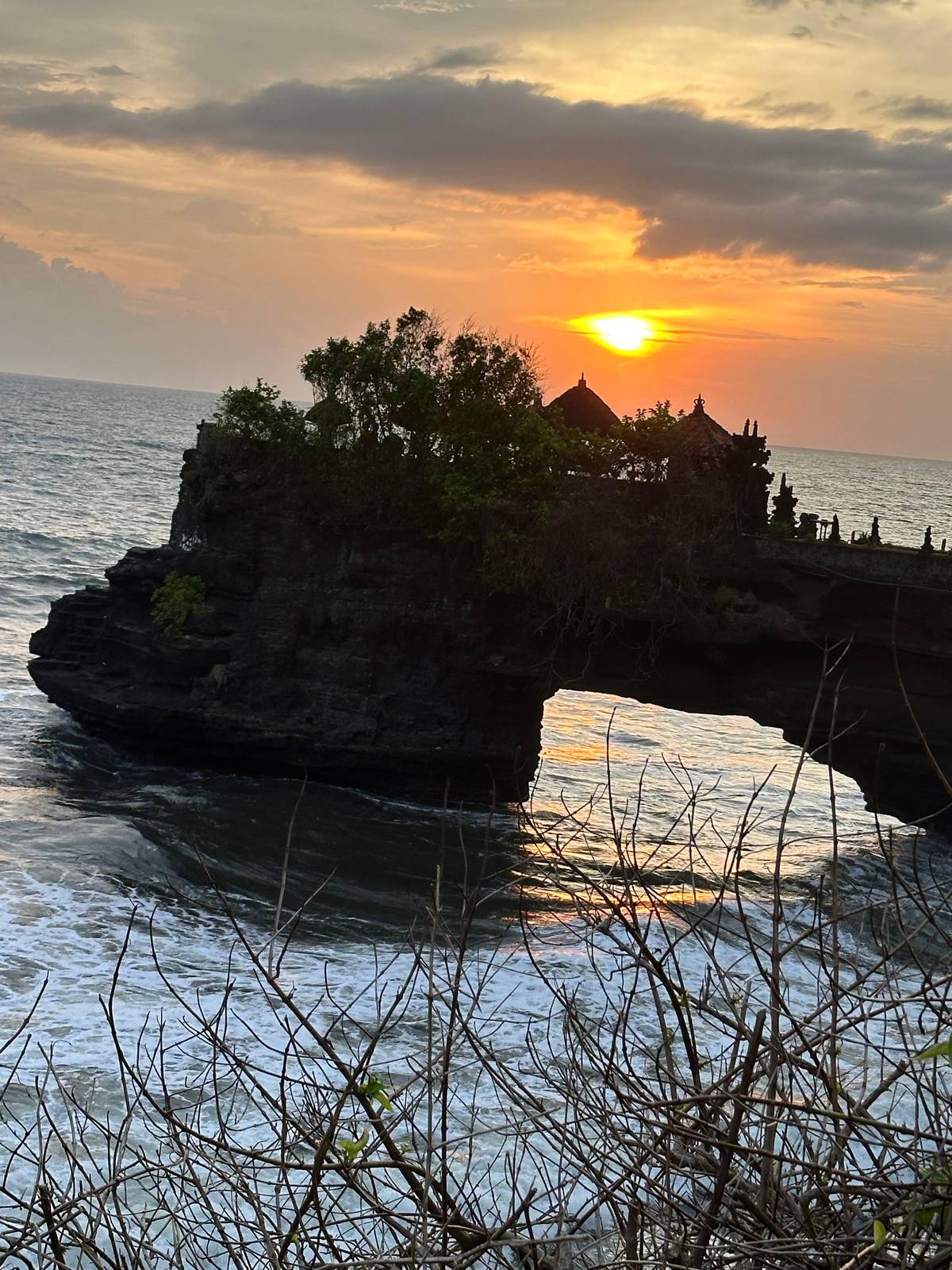
The sunset is the most famous hour, and for good reason: the temple turns into a silhouette, and the official site points to the Enjung Galuh point and the arch of Batu Bolong as the classic places to watch it.48 The full day booked on this site names the sunset at Tanah Lot as its highlight.
For a quieter visit, the Ministry of Tourism suggests the other end of the day: very early in the morning, when there are fewer people and a better chance of a serene image of the temple.3 Light is softer, the heat has not built up, and you have the shore paths almost to yourself. Bring something to eat and drink, since the restaurants and stalls on the clifftops may not all be open at the first light of the day.
Midday brings the strongest sun and the least flattering light. If your tour puts Tanah Lot at noon, make the most of it with the reef at low tide, the museum at the entrance and the cliff walk to Batu Bolong, and come back another evening for the light.910
Checklist
Before you fix the date
01
Check
- Dry or wet season for your dates
- The tide table for the day
- Whether a temple festival falls that week
02
Pack
- Hat and sunscreen for the midday heat
- A light rain layer in the wet months
- A sarong for the temple grounds
Video
A day at the famous Tanah Lot sea temple
The video starts loading once you tap play.
Timing the tide
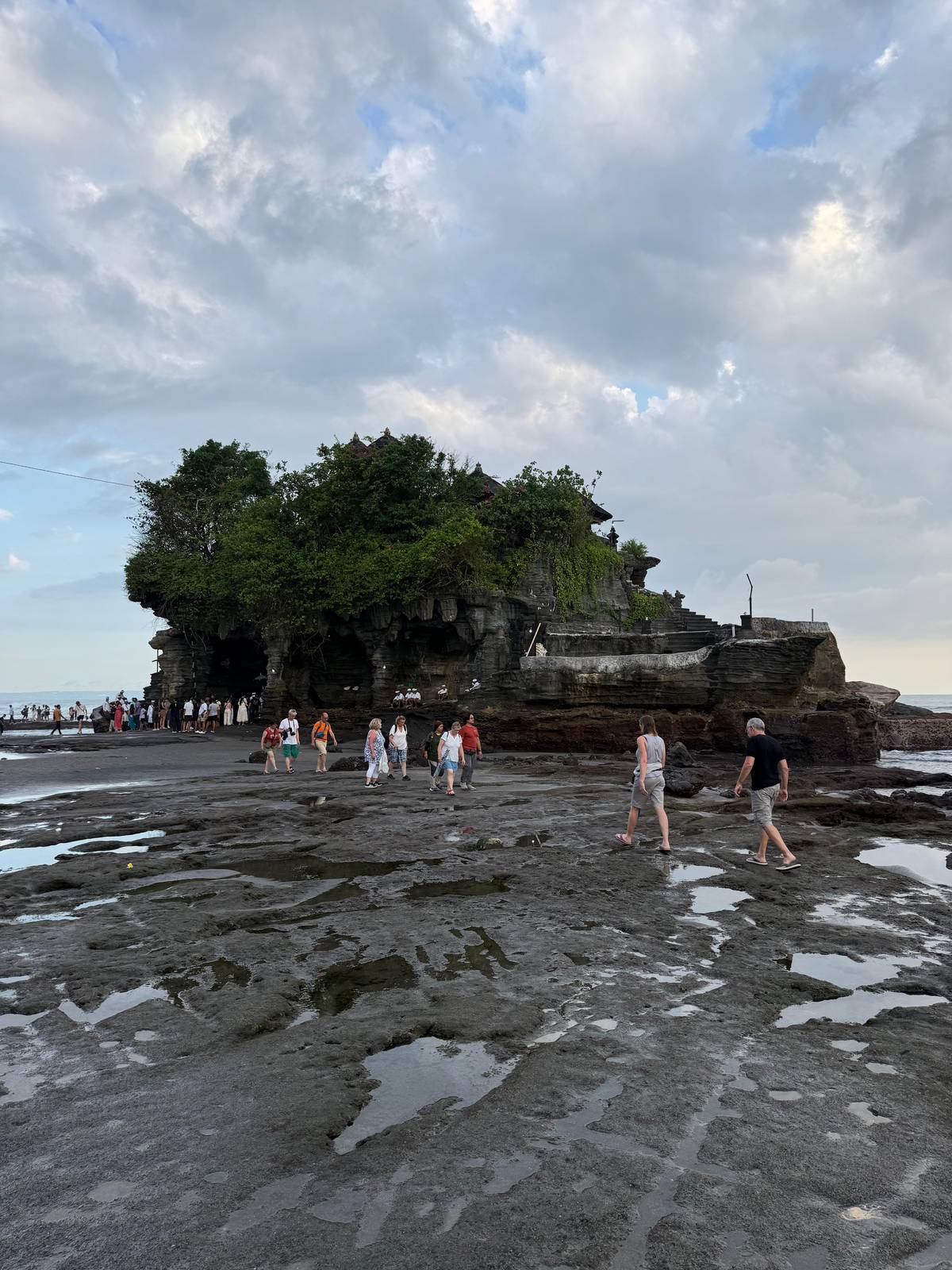
The tide matters as much as the hour. The temple rock can be reached on foot only at low tide; at high tide the sea surrounds it.511 If walking to its foot is part of your plan, look up a tide table and pick a day when low water falls inside the time you have at the temple.
The tides shift later by about 50 minutes each day, so a low tide that suits your plans on one day will not suit it on the next.12 Around new and full moon the spring tides bring the lowest lows of the month and expose the most reef; around the quarter moons, the neap tides change less.1314
The rarest prize is a low tide at sunset, when you can stand on the reef with the temple against the glow. It takes a tide table, a flexible day and some luck. Our page on the tides explains how to read the table.
Festivals and ceremony days
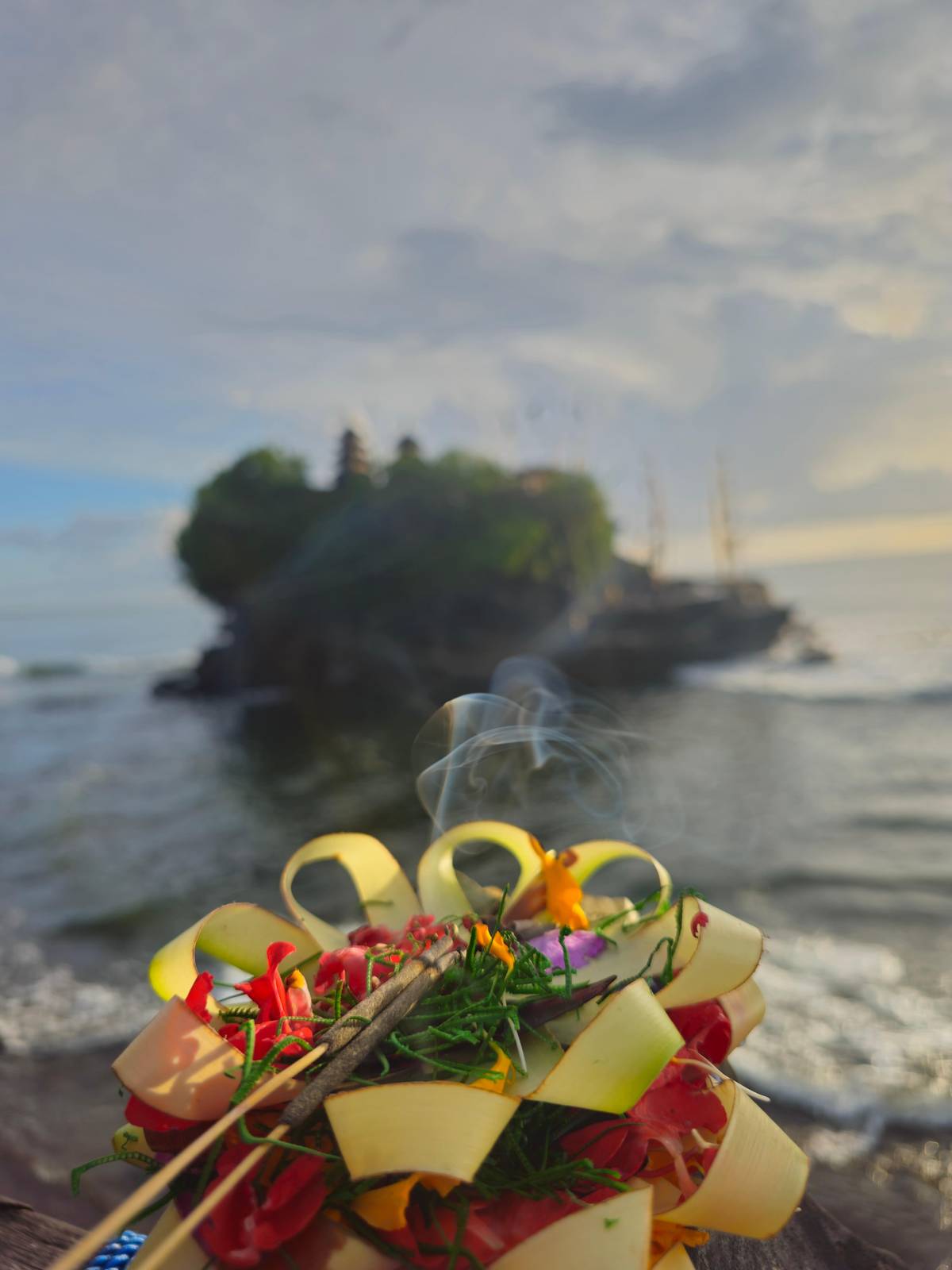
Tanah Lot follows the Balinese calendar as well as the seasons. Its anniversary festival, the pujawali, comes every 210 days on Budha Wage Langkir in the Pawukon calendar.7 On that day, the Ministry of Tourism writes, rows of Balinese women carry offerings on their heads to pray at the temple.15
A festival day is a remarkable time to be there, and a crowded one. Visitors are asked to give priority to worship and to respect the rules on clothing, photography and access to sacred spaces.16 Because the date moves through the Western calendar, ask your guide or your hotel whether a ceremony falls during your stay.
Smaller temples along the shore keep their own days. Batu Bolong holds its pujawali on Wednesday Wage of the Langkir week, and Pakendungan's festival brings the sacred kris in procession from Kediri.171819 Any of these can change what is open to visitors on a given day.
Planning around the full-day tour
If you book the full day that this site sells, the season matters for more than the sea temple. The tour also climbs to the Jatiluwih rice terraces and to Ulun Danu Bratan, and other operators on the same route warn that these highland stops can be cooler and windy, with changing weather at higher places such as Bedugul.
In the dry season you have the best odds of clear views at every stop, from the lake in the hills to the coast. In the wet months, cloud can sit over the hills; pack a light rain layer and accept that the terraces may look moody rather than bright.
Whatever the month, the operator decides the timing of the day, and the listing says that later start times may mean fewer attractions. Book the earliest start you can manage, especially in the short daylight of mid-year, when the sun is up for 11.6 hours at mid-June by our calculation.2
Putting the clocks together
For most travellers the best plan is simple. Come in the dry season if your dates allow, set aside a late afternoon for the sunset, and check the tide table for that day. If low water falls in the morning instead, come early, walk to the rock and enjoy the quiet the ministry recommends.35
On a tour, the operator sets the hour. The full day booked here says its start time decides how many attractions you see, so ask which start time keeps Tanah Lot for the evening if the sunset is your aim. The half-day sunset trip spends 2 hours at the temple at the end of the day.
Both tours can be cancelled free of charge up to 24 hours ahead, which lets you react to the forecast: book early, watch the weather, and move the day if heavy rain is coming.
Your day in the west
The sea temple, the terraces and the lake in one day
Hotel pick-up in south Bali or Ubud, a live guide, free cancellation up to a day before.


You ask,we answer.
What is the best month to visit Tanah Lot?
A month in the dry season. The Ministry of Tourism places it from April to October; August is the driest on the Denpasar record.12
When is the rainy season?
November to March. January is the wettest month on the Denpasar record, with 345 mm of rain.12
How hot is it at Tanah Lot?
Hot all year. Average highs run from 29.6 °C in August to 34.4 °C in April on the Denpasar record.2
Is morning or evening better?
Evening for the silhouette, morning for calm. The ministry recommends very early mornings for smaller crowds and a calmer view.3
When can I walk to the rock?
At low tide only. The rock is reached on foot at low tide; tides shift about 50 minutes later each day.512
Are there festival days to plan around?
Yes, every 210 days. The pujawali of Pura Luhur Tanah Lot falls on Budha Wage Langkir in the Pawukon calendar.7
Sources
What this text is based on
- 1Ministry of Tourism, Republic of Indonesia (indonesia.travel)Weather, Climate & Season↩
- 2Indonesian Agency for Meteorology, Climatology and Geophysics (BMKG)Denpasar climatological information, World Weather Information Service, Station Denpasar (BMKG via WMO World Weather Information Service, city 649), 1961 to 1990↩
- 3Ministry of Tourism, Republic of Indonesia (indonesia.travel)Tanah Lot↩
- 4Daya Tarik Wisata Tanah Lot (official site)Enjung Galuh Area↩
- 5WikipediaTanah Lot↩
- 6Ministry of Tourism, Republic of Indonesia (indonesia.travel)Weather, Climate & Season↩
- 7Ministry of Tourism, Republic of Indonesia (indonesia.travel)Tanah Lot: Sejarah, Filosofi, dan Pura Laut Ikonik di Bali↩
- 8Daya Tarik Wisata Tanah Lot (official site)Batu Bolong Temple↩
- 9Daya Tarik Wisata Tanah Lot (official site)Majapahit Tanah Lot Museum↩
- 10Daya Tarik Wisata Tanah Lot (official site)Batu Bolong Temple↩
- 11Ministry of Tourism, Republic of Indonesia (indonesia.travel)Tanah Lot: Sejarah, Filosofi, dan Pura Laut Ikonik di Bali↩
- 12US National Ocean ServiceFrequency of Tides - The Lunar Day↩
- 13US National Ocean ServiceWhat are spring and neap tides?↩
- 14US National Ocean ServiceWhat are spring and neap tides?↩
- 15Ministry of Tourism, Republic of Indonesia (indonesia.travel)Tanah Lot↩
- 16Ministry of Tourism, Republic of Indonesia (indonesia.travel)Tanah Lot: Sejarah, Filosofi, dan Pura Laut Ikonik di Bali↩
- 17Daya Tarik Wisata Tanah Lot (official site)Batu Bolong Temple↩
- 18Daya Tarik Wisata Tanah Lot (official site)History & Natural Environment↩
- 19Daya Tarik Wisata Tanah Lot (official site)History & Natural Environment↩